
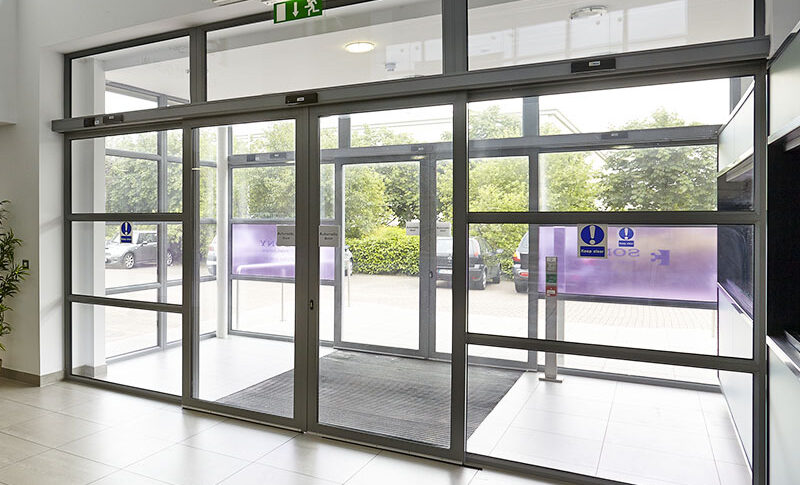
The Door Is Not Just a Door Anymore
Most people don’t think about doors.
You push. You pull. You move on.
For decades, that was enough.
But walk into a modern airport, hospital, or corporate office today — and something feels different.
The entrance responds to you.
It opens without effort.
It closes with precision.
It controls flow without chaos.
And suddenly, you realise the door is no longer passive.
The Manual Door Mindset
If you love manual doors, you probably think the following:
“It’s simple. It works. Why complicate it?”
Fair point.
But here’s the quiet truth:
Manual doors were designed for buildings.
Automatic doors are designed for people.
When footfall increases.
When hygiene matters.
When air conditioning costs rise.
When accessibility becomes mandatory.
The push-pull model starts showing its limits.
What Changed?
Three things changed architecture forever:
-
Volume – Buildings now handle thousands of people daily.
-
Hygiene Awareness – Touch matters.
-
Energy Efficiency – Air leakage costs money.
An automatic sliding door doesn’t just open.
It regulates time, movement, and air.
In hospitals, hermetic doors maintain controlled environments.
In retail and offices, automation reduces crowd friction.
In hospitality, it elevates the arrival experience.
This isn’t luxury.
It’s logical.
The Real Shift
The revolution isn’t mechanical.
It’s psychological.
Buildings are no longer static structures.
They are responsive environments.
An automatic entrance says:
“We anticipated you.”
And that changes perception instantly.
So, Is It Necessary?
If your building has low traffic and no compliance demands — maybe not.
But if you are designing:
-
A hospital
-
A commercial complex
-
A hotel
-
A retail store
-
An institutional facility
Then the question is no longer
“Do we need automation?”
It becomes:
“Why are we still pushing doors manually?”
Final Thought
A manual door works.
An automatic entrance works intelligently.
Modern Indian architecture is moving toward systems that improve flow, hygiene, safety, and energy performance — often starting at the entrance.
The future of buildings doesn’t begin with walls.
It begins with how they welcome you.

Leave A Comment